 |
| photo credit Every twig has a voice! (Thomas Brooks) "Pay attention to the rod and the One who ordained it." Micah 6:9 Christians should hear the rod, and kiss the rod, and sit mute and silent under God's rod. Christians should be mute and silent under the greatest afflictions, the saddest providences, and sharpest trials which they meet with in this world, that they may the better hear and understand the voice of God's rod. As the word has a voice, the Spirit a voice, and conscience a voice—so God's rod has a voice. God's rods are not mutes. They are all vocal, they are all speaking as well as smiting. Every twig has a voice! 'Ah! soul,' says one twig, 'you say it smarts. Well! tell me, is it good to provoke a jealous God?' Jerem. 4:18. 'Ah! soul,' says another twig, 'you say it is bitter, it reaches to your heart; but have not your own doings procured these things?' Rom. 6:20, 21. 'Ah! soul,' says another twig, 'where is the profit, the pleasure, the sweet that you have found in wandering from God?' Hosea 2:7. 'Ah! soul,' says another twig, 'was it not best with you, when you were high in your communion with God, and when you were humble and close in your walking with God?' Micah 6:8. 'Ah! Christian,' says another twig, 'will you search your heart, and try your ways, and turn to the Lord your God?' Lam. 3:40. 'Ah! soul,' says another twig, 'will you die to sin more than ever, and to the world more than ever, and to relations more than ever, and to yourself more than ever?' Rom. 14:6-8; Gal. 6:18. 'Ah! soul,' says another twig, 'will you live more to Christ than ever, and cleave closer to Christ than ever, and prize Christ more than ever, and venture further for Christ than ever?' 'Ah! soul,' says another twig, 'will you love Christ with a more inflamed love, and hope in Christ with a more raised hope, and depend upon Christ with a greater confidence, and wait upon Christ with more invincible patience?' Now, if the soul is not mute and silent under the rod, how is it possible that it should ever hear the voice of God's rod, or that it should ever hearken to the voice of every twig of God's rod? ~ ~ ~ ~ ~ |
Tuesday, November 27, 2012
Every twig has a voice By Thomas Brooks


She had been plucked from the burning fires of Sodom By John MacDuff
 |
|
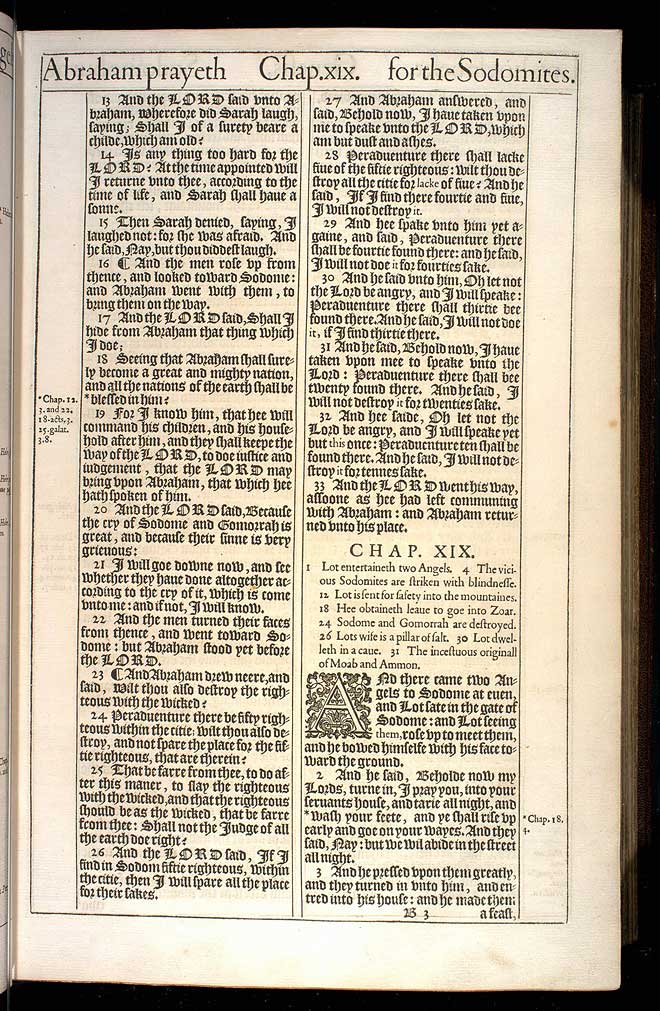
(John MacDuff, "Sunsets on the Hebrew Mountains") "But Lot's wife looked back, and she became a pillar of salt. Genesis 19:26 "Remember what happened to Lot's wife!" Luke 17:32 BEWARE OF WORLDLY ENTANGLEMENTS! How many there are who, like Lot's wife have apparently set out to the Zoar of safety, yet who linger and perish in the plains of Sodom! They hear the terrors of the law; they are roused by the threat of the coming conflagration. They think of fleeing; they have actually set out. But the world they have left has too many attractions and fascinations! Like Demas, they give the preference to these. They look back to Sodom and perish! Beware of yielding to temptation! She had gotten out of reach of the summonings and jeers of her evil companions; she had reached the brow of the hill, and was apparently all safe; she had been rescued from the idolatries of Chaldea, the superstitions of Egypt; she had been plucked from the burning fires of Sodom; and yet she perished notwithstanding! How sad it is, to see a soul . . . that had set out on the way to heaven; that had escaped the temptations of youth; that got rid of worldly entanglements; that got out of Sodom and was on its way to Zoar, yet perishing with salvation in sight! "But Lot's wife looked back, and she became a pillar of salt. Genesis 19:26 "Remember what happened to Lot's wife!" Luke 17:32 |
We are never beyond the reach of His care By J.C. Ryle
(J. C. Ryle, "The Gospel of Mark" 1857)
"Take courage! It is I. Don't be afraid." Mark 6:50
Mark how our Lord sees the troubles of His
believing people, and in due time will help them.
We read that when "the ship was in the midst
of the sea, and He was alone on the land," He
"saw His disciples toiling in rowing," came to
them walking on the sea; cheered them with the
gracious words, "Take courage! It is I. Don't be
afraid," and changed the storm into a calm.
There are thoughts of comfort here for all true
believers. Wherever they may be, or whatever
their circumstances, the Lord Jesus sees them!
Alone, or in company;
in sickness or in health;
by sea or by land;
in perils in the city;
in perils in the wilderness
the same eye which saw the disciples
tossed on the lake, is ever looking at us!
We are never beyond the reach of His care!
Our way is never hidden from Him!
He knows the path that we take, and is still
able to help. He may not come to our aid at
the time we like best, but He will never allow
us utterly to fail.
He who walked upon the water never changes!
He will always come at the right time to uphold
His people. Though He tarry, let us wait patiently.
Jesus sees us, and will not forsake us.
"Take courage! It is I. Don't be afraid." Mark 6:50
How am I to worship God? by Horatius Bonar
(by Horatius Bonar)
Man asks, "How am I to worship God?" and
he has answered it also in his own way. In the
gorgeous temple, in the pillared cathedral, with
incense, and vestments, and forms, and ceremonies,
and processions, and postures, he says.
But these performances are the 'will worship' of
self righteousness, not the obedient service of
men worshiping God in ways of His own choosing.
Man cannot teach man how to worship God. When
he tries it he utterly fails. He distorts worship; he
misrepresents God, and he indulges his own sensuous
or self righteous tastes. His "dim religious light" is
but a reflection of his own gloomy spirit, and an
ignorant misrepresentation of Him "who is light."
God's answer to man's question is given in the
Lord's words, "those who worship Him must worship
Him in spirit and in truth."
The vestments may or may not be lovely; that matters not.
The music may or may not be beautiful.
The knees may or may not be bent.
The hands may or may not be clasped.
The place of worship may or may not be
a cathedral, or a consecrated building.
These are immaterial things; mere
adjuncts of religion, not its essence.
The true worship is that of the inner man; and all
these other exterior things are of little importance.
As it is with love, so it is with worship.
The heart is everything!
God can do without the bended knee,
but not without the broken heart!
He went out, not knowing whither he went By A.B. Simpson

By A.B. Simpson
This is true faith. When we can see, it is not faith but reasoning.
In crossing the Atlantic by ship, I observed this very principle of faith. We could see no path upon the water or sign of the shore. And yet day by day the helmsman was in a path as exactly as if he had been following a great chalk line upon the sea. And when we came within 20 miles of land he knew where we were as surely as if he had seen it all 3,000 miles ahead.
How had we measured and marked our course?
Day by day our captain had taken his instruments, and looking up to the sky had fixed his course by the sun. He was sailing by the heavenly lights, not the earthly lights.
So faith looks up and sails on, by God's great Sun, not seeing one shoreline or earthly lighthouse or path upon the way.
Often our steps seem to lead into utter uncertainty or even darkness and disaster. But He opens the way, making our midnight hours the very gates of day. Let us go forth this day, not knowing, yet trusting.
THE ORDINANCES OF GOD By John MacDuff

By John MacDuff
A wilderness is your place of sojourn. But Immanuel has provided wells in this 'Baca' -- this valley of weeping; for the refreshment of His pilgrims! In merciful adaptation to their weakness and needs, He has furnished means and instrumentality to keep alive the flame that would otherwise languish and decay. These are the golden pipes which convey living water to the soul, fed by Christ Himself from the great cistern of His own grace.
Reader! Do you love the ordinances of God's appointment? Is Sunday to you a holy and welcome season? Do you gladly respond to the summons, "Go you up into the house of the Lord"? Have you felt that it is there, "He commands the blessing, even life for evermore"? Or, holier ground still; do you rejoice, as the solemn season comes round, to covenant afresh with your adorable Redeemer at His own Sacred Feast; to record anew your unalterable attachment to Him as your Lord and Master, and commemorate His dying, ever-living love? See that it not be the reverse of all this. Do the Sunday hours, once a delight -- hang heavily upon you? Is prayer now less a privilege than it was? Is the closet less habitually frequented? Is the fire burning with a sicklier glow on the domestic altar? Have the services of the sanctuary become more matter for the head than for the heart? Be assured these are lamentable symptoms of declension -- tokens of a backward and downward state. "You did run well -- who hindered you?"
Return speedily to the deserted closet! crucify quickly the deadening sin. Have you not thought of it, over and over, at a communion season? Why allow it again to have dominion over you, robbing you of all your joy -- extracting all relish from ordinances -- impeding grace -- grieving the Spirit? Lose no time in seeking restoration of lost filial nearness. "Restore unto me the joy of Your salvation."
The lost Bride, in the Song of Solomon, found her Lord beside the "Shepherds' tents." You may sometimes have long to wait at the 'Gospel Bethesdas' (one of the men lying there had been sick for thirty-eight years), without any visible blessing; but, be assured, the Angel of the Covenant will, in due time, come down, and show that He "is good to those who wait for Him -- to the soul that seeks Him." Wait, then, on the Lord; be of good courage, and He shall strengthen your heart!
Seek to value ordinances, but do not overvalue them. Put not ordinances in the place of the God of ordinances. They are at best but the pole upon which to suspend the brazen serpent; the scaffolding by which to get up beside the Chief cornerstone. "Hold me up, and I shall be safe!" It is not "the altar of God," but "God Himself" who is "the exceeding joy" of His people. And thus, even if wasting health and pining sickness should deprive me of outward ordinances, I may look upwards to that God who, though He "loves the gates of Zion," does not forget "the dwellings of Jacob," and say -- "I will both lay me down in peace, and sleep: for you, LORD, only make me dwell in safety." -- Psalm 4:8
Claim Your Inheritance By Theodore Epp

By Theodore Epp
Ephesians 1:7-15
An inheritance is something that a person comes into possession of because of his relationship with another. It is not something that is earned; it is a gift.
The believer's inheritance includes life itself. By receiving Christ as Saviour, the believer inherits eternal life.
Jesus said, "He that heareth my word, and believeth on him that sent me, hath everlasting life, and shall not come into condemnation; but is passed from death unto life" (John 5:24).
The inheritance of the believer also includes everything he needs for his life. The believer is actually a citizen of heaven who is on a pilgrim journey on earth. However, God has made all spiritual blessings available to the believer.
Paul told believers, "All things belong to you, and you belong to Christ; and Christ belongs to God" (1 Cor. 3:22,23, NASB).
God's riches made available to the believer are also emphasized in Romans 8:32: "He that spared not his own Son, but delivered him up for us all, how shall he not with him also freely give us all things?"
Our present blessings are only a small part of our spiritual inheritance, which is to be received in full in the future.
The moment one receives Christ as Saviour he is placed as a mature son into the family of God and becomes an heir of an inheritance that is beyond human comprehension.
We are to let Christ reign in our lives now, but our full spiritual inheritance includes being with Christ and reigning with Him throughout eternity.
"To an inheritance incorruptible, and undefiled, and that fadeth not away, reserved in heaven for you" (1 Pet. 1:4).
Imagination V. Inspiration By Oswald Chambers

'The simplicity that is in Christ.'
2 Corinthians 11:3
Simplicity is the secret of seeing things clearly. A saint does not think clearly for a long while, but a saint ought to see clearly without any difficulty. You cannot think a spiritual muddle clear, you have to obey it clear. In intellectual matters you can think things out, but in spiritual matters you will think yourself into cotton wool.
If there is something upon which God has put His pressure, obey in that matter, bring your imagination into captivity to the obedience of Christ with regard to it and everything will become as clear as daylight. The reasoning capacity comes afterwards, but we never see along that line, we see like children; when we try to be wise we see nothing (Matthew 11:25).
If there is something upon which God has put His pressure, obey in that matter, bring your imagination into captivity to the obedience of Christ with regard to it and everything will become as clear as daylight. The reasoning capacity comes afterwards, but we never see along that line, we see like children; when we try to be wise we see nothing (Matthew 11:25).
The tiniest thing we allow in our lives that is not under the control of the Holy Spirit is quite sufficient to account for spiritual muddle, and all the thinking we like to spend on it will never make it clear. Spiritual muddle is only made plain by obedience.
Immediately we obey, we discern. This is humiliating, because when we are muddled we know the reason is in the temper of our mind. When the natural power of vision is devoted to the Holy Spirit, it becomes the power of perceiving God's will and the whole life is kept in simplicity.
Immediately we obey, we discern. This is humiliating, because when we are muddled we know the reason is in the temper of our mind. When the natural power of vision is devoted to the Holy Spirit, it becomes the power of perceiving God's will and the whole life is kept in simplicity.
The Need for Silence By Elisabeth Elliot

It is always easier to add to the noise of the world than to be silent. Silence is a very precious thing--"There was silence in heaven about the space of half an hour" (Rv 8:1 AV), when the seventh seal was opened in the Book of the Revelation. Thunder and horses and martyrs and earthquakes had preceded the opening of this seal. Hail, fire, blood, and fearful judgment followed it--but in between, angels stood in the presence of God and there was utter silence.
Have we learned to stand in God's presence, mouths shut, hearts open? "Lord, what do you want me to do?" We must be quiet in order to know Him and to hear Him and to hear Him answer us.
"If any of you lack wisdom let him ask his friends." No. That is not the Word of the Lord. "If any of you lack wisdom let him ask of God" (Jas 1:5 AV) is his Word to us. There is a place for asking wisdom of godly friends, but let us always go first to God.
"Be still"--that is, shut up--"and know that He is God" (Ps 46:10 AV).
Who's a Fool? By Warren Wiersbe
 Read Psalm 14:1-7 The word fool in Psalms or Proverbs does not refer to an unintelligent person. It refers to a person who is morally perverse. Why is he a fool? Because "the fool has said in his heart, 'There is no God'" (v. 1). And what is the result of this? "They are corrupt, they have done abominable works, there is none who does good" (v. 1). God looks down and says, "Does anybody have a clean heart?" The answer is no. The fear of the Lord is the beginning of wisdom (Prov. 9:10). When people don't fear God, they have no wisdom, spiritually or otherwise. The fool says, "There is no God," which is practical atheism. Most of the world today lives by the philosophy that says, "There may be a God, but I'm not going to think about Him." God is not in their thoughts, and consequently, He is not in their lives. The two words "there is" in verse 1 are in italics, which means they were added by the translators to help complete the meaning of the verse. We can read this: "The fool has said in his heart, 'No God.'" The fool not only says that there is no God; he also says no to God. When we say no to God, we are telling Him that we know more about life than He does and that we have more authority than He has. We cut off ourselves from the blessing He wants to give us. Rejecting God involves a man's whole being. "The fool has said in his heart" (v. 1). There we have the heart. In verse 2 God looks down to see if any understand. That involves the mind. "They have all turned aside, . . . there is none who does good, no, not one" (v. 3). There we have the will. Verses 1-3 show the heart, mind and will possessed by sin, because somebody has said, "No God." If you want peace, say yes to God. All of His promises are yes in Jesus Christ (II Cor. 1:20). The most foolish thing you can do is leave God out of your life. If you do, you cut off your source of life and blessing. Don't make the mistake of the fool. Turn to the Lord and submit to His authority. |
Monday, November 26, 2012
The Indispensable Necessity of Spiritual Diagnosis By A.W. Tozer

By A.W. Tozer
Not the fact that the churches are unusually active these days, not what religious people are doing, should engage our attention, but why these things are so. The big question is: Why? And no one seems to have an answer for it.
Not only is there no answer, but scarcely is there anyone to ask the question. It just never occurs to us that such a question remains to be asked. Christian people continue to gossip religious shoptalk with scarcely as much as a puzzled look.
The soundness of current Christianity is assumed by the religious masses as was the soundness of Judaism when Christ appeared. People know they are seeing certain activity, but just what it means they do not know, nor have they the faintest idea of where God is or what relation He has toward the whole thing.
What is needed desperately today is prophetic insight. Scholars can interpret the past; it takes prophets to interpret the present.
Learning will enable a man to pass judgment on our yesterdays, but it requires a gift of clear seeing to pass sentence on our own day.
One hundred years from now historians will know what was taking place religiously in this year of our Lord 1956; but that will be too late for us. We should know right now.
Difficulties are Proof Contexts By Elisabeth Elliot
Repeatedly I am asked variations of this question: Did the Lord comfort you or were you sometimes lonely or sad? It is not an either-or thing. If I had not been lonely and sad at times, how could I have needed, received, or appreciated comfort?
It is the sick who need the physician, the thirsty who need water. This is why Paul not only did not deplore his weaknesses, he "gloried" in them, for they provided the very occasions for his appropriating divine help and strength.
It was in prison that Joseph knew the presence of the Lord.
It was in the lion's den that Daniel's faith was proved.
It was in the furnace that Daniel's three friends found themselves accompanied by a fourth.
We have plenty of "proof texts"--but in order to experience their truth we have to be placed in "proof contexts." The prison, the lion's den, the furnace are where we are shown the realities, incontestably and forever.
The Day of Clear Vision to the Dim Eyes By Horatius Bonar

"The eyes of those who see shall not be dim." –Isaiah 32:3
These blessed words tell us four things,
(1.) There are eyes that do not see;
(2.) there are eyes that do see;
(3.) of the eyes that see, some are dim;
(4.) the time is at hand when they shall not be dim.
I. THERE ARE EYES THAT SEE NOT.
Of the dead idols this is said– "They have eyes but see not;" and this is not amazing. But that the same should be said of living men is amazing. It is not true of angels; it is not true of devils; they have eyes and see. It is true of men; of millions; of the greater part of our race; they have eyes but see not. They shut them; they turn them away from their proper objects; they allow scales to grow over them; they deliberately veil them. O fearful calamity! O bitter curse! And yet for all this, they themselves are responsible. It is not God that blinds them, or veils, or darkens. They are their own undoers. They did not wish to see; they were resolved not to see. Self-blinded, not God blinded! They allow this world to blind or dazzle them; so that their eyes are useless. They let Satan, the god of this world, put his hand over their eyes; or bewilder them with his snares and enticements. Thus, having eyes they see not.
II. THERE ARE EYES THAT SEE.
These are they whom God has enlightened; whose eyes the son of God has opened; for it is his work to open the eyes of the blind. They did not open their own eyes. Their eyes did not open by chance. Once they were blind– quite as blind as others; but now they see. There are not many of whom this can be said; yet there are some. And what do they see?
(1.) They see God;
(2.) they see Christ;
(3.) they see themselves;
(4.) they see the word of God;
(5.) they see the things within the veil.
I AM THOU ART By Major Ian Thomas
All you need to say to Him is this, "Lord Jesus - Thou art! For me - Just what I need! My Saviour and my Redeemer - for ever!"
You will be redeemed, and He will give you life; by the gift of His indwelling Holy Spirit, Jesus Christ. He will give you His Life, and this is what it means to "live in the Spirit"; but "If we live in the Spirit let us also walk in the Spirit: (Galatians 5:25), and this is what it means to "walk in the Spirit" to take one step at a time, and for every new situation into which every new step takes you, no matter what it may be, to hear Christ saying your heart, "I AM!" - and then to look up into His face by faith and say, "Thou art! That is all I need to know Lord, and I thank Thee; for Thou art never less than adequate!"
True godliness leaves the world convinced beyond a shadow of a doubt, that the only explanation for you, is Jesus Christ to whose eternally unchanging and altogether adequate "I AM!" your heart has learned to say with unshatterable faith, "Thou art!"
From: The Mystery of Godliness. Grand Rapids: Zondervan Publising House. ©1964.
The Lord's Dealings With His People By Robert Murray MCheyne
 |
| Robert Murray MCheyne |
There are times in the, life of a believer when he is like a traveller who has arrived at some high eminence; he can look back on the way he has gone and the way he has yet to go. So this is a passage where God tells us what he has done and what he will yet do. The history of a believer is wonderful, whether we look backward or forward. If we look back, there is election in a past eternity; and if we look forward, there is deliverance and final victory. As Christ's name is "wonderful", so all the members of his body are wonderful, for they are "men wondered at".
The history of a believer divides itself into two parts - before and after conversion.
Let us consider the past history of a believer.
"Hearken unto me, O house of Jacob and all the remnant of the house of Israel, which are borne by me from the belly, which are carried from the womb" (verse 3). God follows his chosen vessels before their conversion.
Now, let us notice some of his providences; and the first before they are awakened is, in preserving them. There are some, I believe that are like John, "filled with the Holy Ghost even from their mother's womb" (Luke 1:15); or like Jeremiah, "before thou camest out of the womb I sanctified thee" (Jeremiah 1:5). But this is not the way commonly, for "we are shapen in iniquity and conceived in sin" (Psalm 51:5). We are degenerate plants of a strange vine. Now those that are vessels of mercy are kept safe. God keeps them from falling into hell. They are often brought to the brink of it, it may be by a fever, or such like; but "he sends his word and heals them" (Psalm 107:20). Others are cut down; but God spares his chosen vessels.
A second providence before conversion is, God does not take away his Holy Spirit from them. It is a wonder God does not take it away. Often they resist and grieve the Spirit, and sin against convictions. Ah, brethren! we will never know till eternity, what a mercy it was that God never took away his Spirit from us.
A third mercy before conversion is, he brings them to the place where they are awakened. Who brought Zacchaeus to the sycamore tree? It was the same hand that beckoned him to come down. Who brought the woman of Samaria to the well? The same that told her all things that ever she did. Who brought you and me to the place where we were awakened? It was he that hath "borne us from the belly, and carried us from the womb"- he who is the Alpha and the Omega.
A second part of the believer's history is the time after awakening and before conversion. Unconverted souls are Satan's property; and when Christ comes in, no wonder that Satan roars and is enraged; and so does the world - they do not like to see their companions leaving them. The tenderest parent is often enraged at his child leaving him. But let us notice what God does for them after they are awakened.
First of all, he does not let them go back. He makes them say, "I have opened my mouth to the LORD and I cannot go back" (Judges 11:35) - I will never, never go back. Ah! many are driven back like a ship before a stormy sea. Once they bade fair for Christ and for heaven; but they could not bear the tempest of hell and the rage of an ungodly world. But God's children are carried forward: they are carried by God from the belly - they are borne by him from the womb. Ah! you are not driven back by persecutions, nor by a tempting world. You can tell the world you have opened your mouth to the Lord, and you cannot - you will not go back. God help us to go forward!
Secondly, God keeps them from refuges of lies. Some set out with great anxiety, but fall asleep, and never awake till they hear the voice, "Come to judgment! Come to judgment! Come away!" Others take rest in outward forms, prayer, and ordinances. Some go farther still -they take rest in their feelings. These are refuges of lies; but chosen vessels are carried past these refuges of lies; and they are carried past the temptations of the world. It is a sweet thing to be carried by Jesus.
Another mercy is, they are carried to Jesus - to the Rock, the smitten Rock, to the wounded, bleeding bosom of Jesus. God never rests till he carries them to his Son -"I drew them with cords of love" (Hosea 11:4). It is God that does it. Oh! if any of you have been brought to the Rock that is higher than you, it is God that has done it. He does all, from election to coronation. Oh it is quite natural to be awakened, but not so to be brought to Jesus - to leave all your own righteousness, and to take the righteousness of another. Oh it is divine! None but God can make you do it. Ah! can you say, then, "In the LORD have I righteousness and strength" (Isaiah 45:24)?
Let us consider the future part of a believer's history.
"And even to your old age I am he; and even to hoar hairs will I carry you: I have made and I will bear; even I will carry, and will deliver you" (verse 4). Here you may observe three particulars.
Who is it that offers to carry them even to old age?
It is "I am he" — "He". It is the very same being that has brought us hitherto that will carry us on till he sets us down in glory. Ah! it is a sweet truth -"And even to your old age I am he; and even to hoar hairs will I carry you." The future history of those of you who are come to Christ is unknown to yourselves. God in mercy hath hid it from us; but he hath carried us through the worst already; and do you think that he that hath carried us thus far will let us slip now? Ah no! "And even to old age I am he; and even to hoar hairs will I carry you! I have made, and I will bear..." Let us notice some of the believer's trials, while journeying through the wilderness.
Temptation. It is when you are brought to Christ that you feel temptation. But, ah! you can then say, "Rejoice not against me, O mine enemy! When I fall, I shall arise; and when I sit in darkness the LORD shall be a light unto me" (Micah 7:8). Never, till a man is brought to Christ, does Satan rage and put forth such wily temptations: "Simon, Simon, behold, Satan hath desired to have you, that he might sift you as wheat" (Luke 22:31). As long as you are away from Christ the devil will let you pray, read the Bible, and come to the house of God, and let you think you believe; but, when Jesus comes and draws you to himself, then temptations begin. Many a believer is like to fail in the day of adversity; but, beloved, fear not. There is one who hath made and will bear - who will carry, and deliver you.
There are afflictions. Ah! there are many, many afflictions, beloved, between you and the better land. There are the afflictions of a poor, frail, dying body. There are also soul afflictions - darkness, desertions, doubting, fears. And there are family afflictions. But ah! there is a hand engaged to carry us through. It matters not the rugged mountains, if the sheep be on the Shepherd's shoulder.
The time may be long. Some may have a short fight and a sure victory - but a step to the crown. Others of you may have long, long to tarry here. This sweet promise is to you - "And even to old age I am he", etc.
Let us consider how he will carry us.
"Through faith." They are "kept by the power of God through faith unto salvation" (I Peter 1:5). It is by faith you first found peace to your soul; so by faith you will be carried to the end. You came empty at first, and you found Christ; so you must come to the last. You came hell-deserving, undone, and closed with him as the Lord your righteousness; so you must come to the last. You came weak, and you found strength; you came poor, and you were made rich; so you must come to the last.
Consider why he will carry us.
Because he hath said it. And hath he said it, and will he not do it? It is impossible for God to lie. God will carry you. He hath pledged his word he will do it.
He will carry us because his honour is engaged. If we were suffered to drop from the Shepherd's shoulder, then all in heaven - all in hell - would hear of it; but, ah! no. Though we sin every day, yet he pardons us every day - he blots out all our iniquities.
Another reason why he will carry us is, because he loves us. Ah, beloved, he loves us better every day. It was said of Jesus, "He increased in wisdom and stature, and in favour with God and man" (Luke 2:52). So it is with all that are united to him. If, when we were enemies, God loved and Jesus died for us, how much more now, being reconciled by the death of his Son! Ah, yes! he will love us - "I have made, and I will bear; even I will carry, and will deliver you."
I would now apply this subject.
To you that are bold, and have no fears - no doubts. Ah! rejoice with trembling. Believer, you are carried by the same hand. The nailed hand of Jesus is underneath you. Walk softly.
To you that are fearful, fear not: your Redeemer is strong. He that brought you to Christ will bring you safe to glory. He, from his throne, will put the crown upon your head - the crown of victory. He will do it -"I have made, and I will bear; even I will carry, and will deliver you." Greater is he that is for you, than he that is in the world" (1 John 4:4). "Fear not, little flock: it is your Father's good pleasure to give you the kingdom" (Luke 12:32).
Another reason why he will carry us is, because he loves us. Ah, beloved, he loves us better every day. It was said of Jesus, "He increased in wisdom and stature, and in favour with God and man" (Luke 2:52). So it is with all that are united to him. If, when we were enemies, God loved and Jesus died for us, how much more now, being reconciled by the death of his Son! Ah, yes! he will love us - "I have made, and I will bear; even I will carry, and will deliver you."
I would now apply this subject.
To you that are bold, and have no fears - no doubts. Ah! rejoice with trembling. Believer, you are carried by the same hand. The nailed hand of Jesus is underneath you. Walk softly.
To you that are fearful, fear not: your Redeemer is strong. He that brought you to Christ will bring you safe to glory. He, from his throne, will put the crown upon your head - the crown of victory. He will do it -"I have made, and I will bear; even I will carry, and will deliver you." Greater is he that is for you, than he that is in the world" (1 John 4:4). "Fear not, little flock: it is your Father's good pleasure to give you the kingdom" (Luke 12:32).
May God bless his Word. Amen.
A tumor and swelling in the mind By Thomas Brooks
 |
| kjvonline
"The Lord Almighty has done it to destroy your pride
and show his contempt for all human greatness." Isaiah 23:9 Pride is the original and root of most of those notorious vices that are to be found among men. Of all sins, pride is most dangerous to the souls of men. Pride is . . . a gilded misery, a secret poison, a hidden plague. Pride is . . . the engineer of deceit, the mother of hypocrisy, the parent of envy, the moth of holiness, the blinder of hearts, the turner of medicines into maladies. Of all sins, spiritual pride is most dangerous, and must be most resisted. Spiritual pride is the lifting up of the mind against God; it is a tumor and swelling in the mind, and lies in despising and slighting of God—and in the lifting up of a man's self, by reason of birth, breeding, wealth, honor, place, relation, gifts or graces—and in despising of others. Spiritual pride is a white devil, a gilded poison—by which God is robbed of His honor, a man's own soul of his comfort and peace. Pride is a sure forerunner of a fall. "Pride goes before destruction, and a haughty mind before a fall." Herod fell from a throne of gold—to a bed of dust. Nebuchadnezzar fell from a mighty king—to be a beast. Adam fell from innocency to mortality. The angels fell from heaven to hell—from felicity to misery. "The day is coming when your pride will be brought low and the Lord alone will be exalted. In that day the Lord Almighty will punish the proud, bringing them down to the dust!" Isaiah 2:11-12 "The Lord detests all the proud of heart. Be sure of this: They will not go unpunished." Proverbs 16:5 |
God's Say-So By Oswald Chambers
'He hath said ... so that we may boldly say ...'
Hebrews 8:5-6
My say-so is to be built on God's say-so. God says - "I will never leave thee," then I can with good courage say - "The Lord is my helper, I will not fear - " I will not be haunted by apprehension. This does not mean that I will not be tempted to fear, but I will remember God's say-so. I will be full of courage, like a child "bucking himself up" to reach the standard his father wants.
Faith in many a one falters when the apprehensions come, they forget the meaning of God's say-so, forget to take a deep breath spiritually. The only way to get the dread taken out of us is to listen to God's say-so.
What are you dreading? You are not a coward about it, you are going to face it, but there is a feeling of dread. When there is nothing and no one to help you, say - "But the Lord is my Helper, this second, in my present outlook."
Are you learning to say things after listening to God, or are you saying things and trying to make God's word fit in? Get hold of the Father's say-so, and then say with good courage - "I will not fear." It does not matter what evil or wrong may be in the way, He has said - "I will never leave thee."
Frailty is another thing that gets in between God's say-so and ours. When we realize how feeble we are in facing difficulties, the difficulties become like giants, we become like grasshoppers, and God becomes a nonentity.
Remember God's say-so - "I will in no wise fail you." Have we learned to sing after hearing God's key-note? Are we always possessed with the courage to say - "The Lord is my helper," or are we succumbing?
Bigger and Better By Warren Wiersbe
Read Psalm 4:1-8
Sometimes God's people can be so discouraging! In Psalm 4 we find David listening to people saying, "Who will show us any good?" (v. 6). David's own men were discouraged. They were going through a trial, and some were saying, "O David, this is the end. God is no longer going to help us." That's hard to take. It's rough when your associates or friends say to you, "Well, you've reached the end. Who will show us any good?"
But David called on the Lord, and God enlarged him. "You have relieved (enlarged) me when I was in distress" (v. 1). Pressure on the outside should make us bigger on the inside. The trials of life will press against us and make us either midgets or giants--either smaller or bigger. But we have to start on the inside. "You have relieved me when I was in distress." How did this happen?
David cried out to God, "You have put gladness in my heart" (v. 7). He started out with sadness and ended with gladness. He started with tears and ended with triumph. Once again he's sleeping beautifully. "I will both lie down in peace, and sleep; for You alone, O Lord, make me dwell in safety" (v. 8).
David discovered that what was important was not the circumstance around him but the attitude within him. Let God enlarge you when you are going through distress. He can do it. You can't do it, and others can't do it for you.
In fact, others may want to make things even tighter and narrower for you. But when you turn to the Lord and trust Him, He will enlarge you on the inside. You'll come out of your distresses a bigger person because you've trusted in the Lord.
There is a relationship between our attitude inside and our circumstances outside. If we maintain the proper attitude, God will use our trials to enlarge us. Are you going through a trial today? Give your circumstances to the Lord and trust Him to enlarge you.
A Devious Repentance By Elisabeth Elliot
Recently I committed a sin of what seemed to me unpardonable thoughtlessness. For days I wanted to kick myself around the block. What is the matter with me? I thought. How could I have acted so?
"Fret not thyself because of evildoers" came to mind. In this case the evildoer was myself, and I was fretting. My fretting, I discovered, was a subtle kind of pride. "I'm really not that sort of person," I was saying.
I did not want to be thought of as that sort of person. I was very sorry for what I had done, not primarily because I had failed someone I loved, but because my reputation would be smudged.
When my reputation becomes my chief concern, my repentance has a hollow ring. No wonder Satan is called the deceiver. He has a thousand tricks, and we fall for them.
Lord, I confess my sin of thoughtlessness and my sin of pride. I pray for a more loving and a purer heart, for Jesus' sake.
The Gracious Verdict By John MacDuff
The Words of Jesus
By John MacDuff
"Remember the words of the Lord Jesus, how He said"--
"Neither do I condemn thee; go and sin no more."--John viii. 11.
How much more tender is Jesus than the tenderest of earthly friends? The Apostles, in a moment of irritation would have called down fire from heaven on obstinate sinners. Their Master rebuked the unkind suggestion. Peter, the trusted but treacherous disciple, expected nothing but harsh and merited reproof for faithlessness. He who knew well how that heart would be bowed with penitential sorrow, sends first the kindest of messages, and then the gentlest of rebukes, "Lovest thou me?"
The watchmen in the Canticles smote the bride, tore off her veil, and loaded her with reproaches. When she found her lost Lord, there was not one word of upbraiding! "So slow is He to anger," says an illustrious believer, "so ready to forgive, that when His prophets lost all patience with the people so as to make intercession against them, yet even then could He not be got to cast off this people whom He foreknew, for his great name's sake."
The guilty sinner to whom He speaks this comforting "word," was frowned upon by her accusers. But, if others spurned her from their presence, "Neither do I condemn thee." Well it is to fall into the hands of this blessed Saviour-God, for great are His mercies.
Are we to infer from this, that He winks at sin? Far from it. His blood, His work--Bethlehem, and Calvary, refute the thought! Ere the guilt even of one solitary soul could be washed out, He had to descend from His everlasting throne to agonise on the accursed tree.
But this "word of Jesus" is a word of tender encouragement to every sincere, broken-hearted penitent, that crimson sins, and scarlet sins, are no barriers to a free, full, everlasting forgiveness. The Israelite of old, gasping in his agony in the sands of the wilderness, had but to "look and live;" and still does He say, "Look unto me, and be ye saved, all the ends of the earth." Up-reared by the side of his own cross there was a monumental column for all Time, only second to itself in wonder.
Over the head of the dying felon is the superscription written for despairing guilt and trembling penitence, "This is a faithful saying, and worthy of all acceptation, that Jesus Christ came into the world to save sinners." "He never yet," says Charnock, "put out a dim candle that was lighted at the Sun of Righteousness." "Whatever our guiltiness be," says Rutherford, "yet when it falleth into the sea of God's mercy, it is but like a drop of blood fallen into the great ocean."
Reader, you may be the chief of sinners, or it may be the chief of backsliders; your soul may have started aside like a broken bow. As the bankrupt is afraid to look into his books, you may be afraid to look into your own heart. You are hovering on the verge of despair. Conscience, and the memory of unnumbered sins, is uttering the desponding verdict, "I condemn thee." Jesus has a kinder word--a more cheering declaration--"I condemn thee not: go, and sin no more!"
"AND ALL WONDERED AT THE GRACIOUS WORDS THAT PROCEEDED OUT OF HIS MOUTH."
Subscribe to:
Posts (Atom)